

Article Summary
In this article, we’ll discuss the unique circumstances that made the English Civil War a catalyst for technical writing, the techniques early technical writers used to make information understandable and widely disseminated, and the lessons modern technical writers can learn from these nearly 400-year-old examples.
The English Civil War, or the wars of the Three Kingdoms, was, frankly, a deeply traumatising event in British history. A country that had known relative peace for nearly 100 years was suddenly thrown into a modern, armed conflict. This conflict led to the estimated deaths of over 200,000 people, or nearly 5% of the population, comparable to the losses suffered during the First World War. It also created or exacerbated equally bloody conflicts in Scotland, Wales and Ireland, such as the Irish Confederate Wars and the Bishops’ War, the effects of which are still felt today. It also resulted in the Death of Charles the 1st, the only monarch in English history to be tried, sentenced and executed, an event that would have been unthinkable just a few years before.
So far, so depressing. But the English Civil War also had some positive effects. It started the process of making Britain a modern, parliamentary democracy. It inspired many new radical ideas, such as free speech, religious freedom, and meritocracy, which we still hold dear today. It also led to a boom in technical writing, with many authors writing practical, efficient guides to new technology, helping many people get to grips with using it. While not as stark as the efforts of the Bansho Shirabesho and its successor departments in Japan 200 years later, you can see some of the techniques, formats and conventions that modern technical authors still use to this day, being trialled in these early technical documents.
So, how did this war advance technical writing? In this article, I’ll go through how a unique set of circumstances led to much technical writing being produced and consumed, and what modern technical writers can learn from these examples.
Want to find out more?
An environment primed for technical writing
At the outbreak of the English Civil War in 1642, several factors made technical writing much more widespread than before. Firstly, recent advances in printing, and the relative cheapness and availability of printing presses, made it quite easier for people to get their content published. During this period, printing houses were established in major towns up and down the country, with around 22 registered in 1640, which then nearly doubled by 1649 to 40. In fact, these printing houses had a profound effect on the conflict. The English Civil War is often cited as the first modern propaganda war, with both Royalists and Parliamentarians taking advantage of this new technology to print newspapers, leaflets and other material to support their efforts. This also meant that if you wanted to print any type of document, you had much easier and cheaper access to printing presses.
Secondly, the English Civil War occurred during a period of major technological change. While there aren’t a massive amount of new inventions during this period, the pressures of the conflict provided the catalyst for different iterations of already established technologies. Examples include the previously mentioned printing presses, artillery and flintlock firearms, cartography, telescopes, building and architectural techniques, to name a few. Because this conflict sits within the early modern period, the pace and frequency of technological updates and improvements were already increasing, and the pressures of war only amplified this effect.
Thirdly, and most importantly, there was a need to educate and inform a large number of people on this new technology. When we think of wars, people tend to focus on the battles fought and the weapons and equipment used to fight them. However, in the early modern period, wars needed more than soldiers and guns. Armies needed to be raised, fed, housed, paid, equipped and trained in order to be effective. This meant that there needed to be supporting staff of accountants, logistics, builders, manufacturers, and instructors to support these modern armies. And these people all needed to be trained in various aspects of their craft, including the new technologies used in these professions.
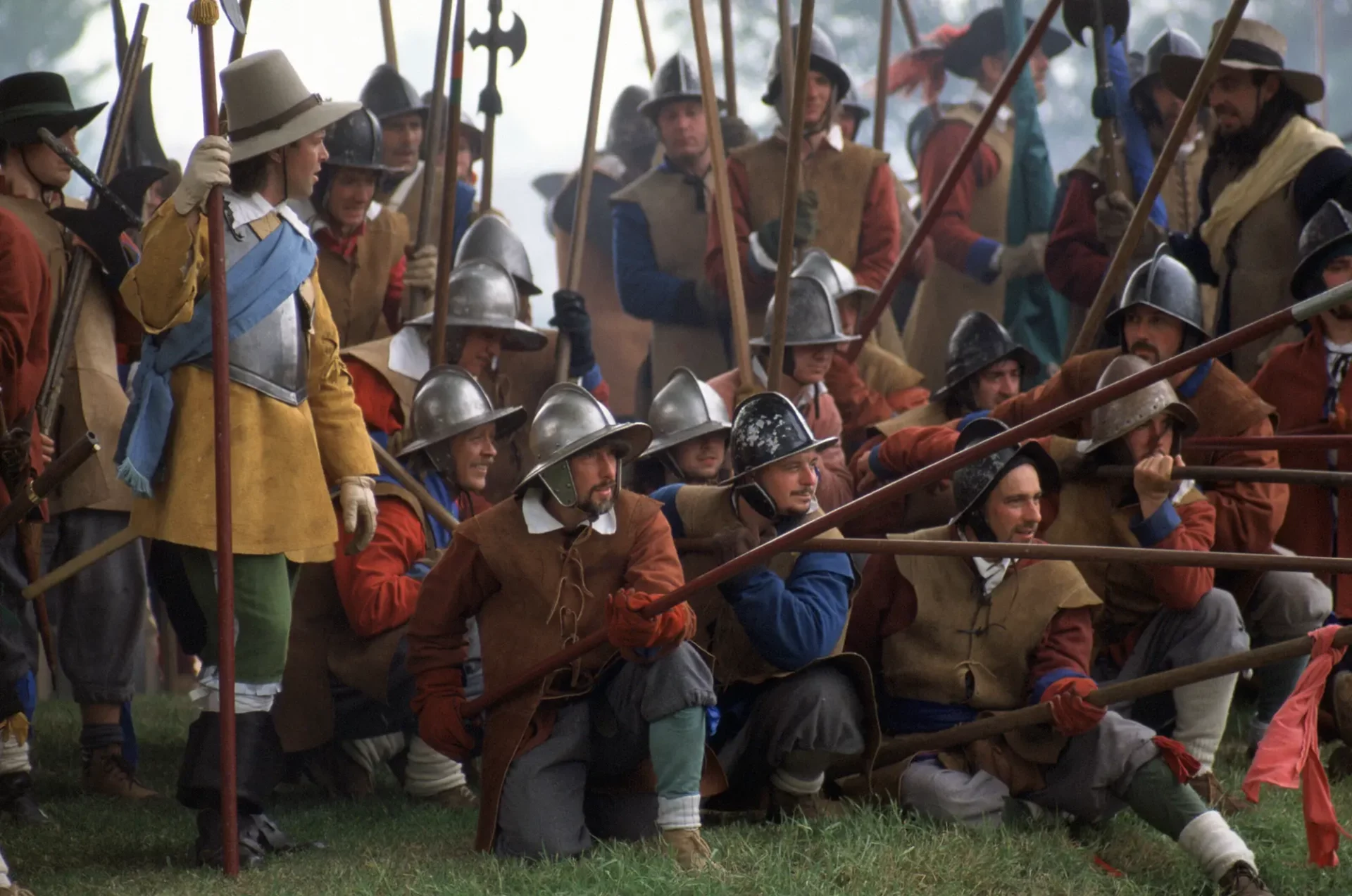
So, you have the perfect conditions for a boom in technical writing: a cheaper, faster means of creating documentation, paired with significant technological advances, and a population that needs to be quickly educated on these advances. So, what did technical documentation look like during this period?
Technically, it is documentation
I should start this section by stating that, really, technical writing and technical documentation isn’t really a ‘thing’ until the Industrial Revolution. Some even argue that modern technical writing doesn’t really happen until the First or Second World War. However, while you won’t find any information portals or IKEA-style instruction manuals from this period, you will find documentation designed to inform users about new technologies or provide how-to guides for new processes. Even though modern technical writers may look askance at the overly descriptive, complex language, or at how some documentation assumes the reader already understands the subject matter, it still does the job of technical documentation.
With that in mind, let’s look at some examples:
Lawes and Ordinances of Warre – 1642
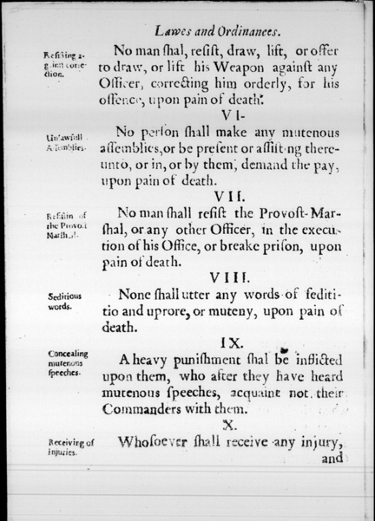
Issued by the Earl of Essex in 1642, this document contains an exhaustive list of instructions, with explanations of why they matter, for prospective armies. It includes guidelines on discipline, religious observances, rules for dealing with civilians, gathering supplies, finding spies, and, most importantly, punishments for swearing.
While some elements would make a modern technical writer’s head spin (for example, the first-page cover contains at least 5 different font types and many text sizes), the document still has many good elements. Instructions are clear and to the point, making it easy for the layperson to read (Without wanting to go down a rabbit hole here, actual literacy rates during this period are hotly contested, with figures ranging from 30% to 70% in adult males, while some historians argue that the majority were ‘Pragmatically literate’, such as in this article by Mark Haliwood). It is structured well, with clearly marked sections and subsections, and the text is neatly and clearly formatted overall. What I found most impressive is the outer margins of each page, where brief descriptions of each section presumably help the reader quickly flick through the pages and find what they need without fully opening the document, like proto-metadata for a printed book.
This document (which my technical writer colleague asked me to remove the full title; see the link above for its full majesty) is a detailed guide on how to arrange pike and musket infantry in different circumstances, such as marching or preparing for battle. The first 8 pages are very dense, with much detail on the proper way to arrange troops. What is especially good is how the author breaks up this information with formatting and, where possible, uses clear, simple instructions to describe complex procedures, almost like an Early Modern English version of Simplified Technical English.
The best bit of this text comes in its final 20 pages, where it switches to very detailed black-and-white illustrations, showing the correct procedures for loading and readying muskets and preparing pikes. These illustrations are very detailed and are set out in numbered processes, so the reader can easily follow the procedures. While text overlapping the illustrations could cause confusion and make them harder to parse, these are so well thought out and realised for the time that I’ll give the author the benefit of the doubt.
Want to find out more?
Castrametation, or measuring out the quarters for encamping an army – 1642
John Cruso’s 1642 pamphlet deals with how to properly arrange and construct a camp for a travelling army. At 54 pages, it includes detailed guidance, such as lists of supplies needed for armies of varying sizes, how to secure a camp, how to size an encampment, and various ways to set up a camp. Apart from this practical information, there are explanations of why certain steps are needed, such as citing historical examples of camps that were not properly secured or maintained, and the dire consequences of not doing so.
While the language is sometimes overly descriptive, simple, well-annotated wire diagrams help the reader picture the arrangements in visual terms. In contrast to The Military Discipline, these simple diagrams help the reader quickly understand the spatial arrangement of where everything should be organised, which could be very confusing using just text alone. Also, the authors often use lists, bullet points, and step-by-step procedures that the reader can easily follow for passages such as dealing with supplies, placing designated structures in a camp, and constructing officers’ quarters according to rank.
What can we learn from 400-year-old documentation?
So what can we learn from these three examples? While each of these examples would fail certain aspects of modern technical writing (such as the use of overly descriptive language and the use of multiple fonts, sometimes in the same sentence, which would definitely draw the ire of my technical writing colleagues), you can see there are many of the techniques used by modern technical writers, such as:
- The use of clear structure throughout the documentation.
- Creative techniques, such as including summaries in the margins, let readers quickly find the information they need.
- The use of lists, processes and other step-by-step instructions to break down complex tasks into easy-to-understand instructions.
- The use of illustrations to show complex processes, or illustrate complicated set-ups.
These techniques are not unique to English Civil War writing. You can find examples in many early modern, or older, texts, such as De re metallica (1556) and The Various and Ingenious Machines of Captain Agostino Ramelli (1588). These conventions were not invented in response to the war, but were tried-and-tested methods of communicating with people. This period sees their more prolific use because of the availability of printing, technological advances and the changes they caused, and the need to quickly inform people about them. In the overall history of technical writing, you can see this period as quickening the pace of a path that had already been started by writers in the medieval and even the ancient world toward modern technical writing. These techniques have been used throughout history because they help with what we’ve been trying to do for hundreds of years: communicate complex subject matter clearly.
If you’ve enjoyed this look at technical content throughout the ages, you may be interested in other articles I’ve written on technical writing in history, such as Empire, Wars and Revolutions, a brief history of technical writing, and the Barbarian books department, a look at how the Japanese government kick-started its late 19th-century industry with a content operations strategy. And if you have a technical writing, content operations or translation project you’d like to talk to us about, get in touch with us here. We’d be happy to hear from you.
Related articles

Technical Manuals
3di has the expertise to deliver accurate, clear technical manuals for complex products and services.…

Why great documentation matters in the research field
In this article, we look at how quality documentation plays a key role in scientific…

5 steps to create AI-ready documentation
5 steps you can take to make your technical docs easier for AI to discover…