

Article Summary
In this article, we’ll discuss some examples of technical writing in popular literature, how the characters benefit from reading technical documentation, and what real-world lessons technical writers can learn from these examples.
Those of you who have been following our social media posts, as well as our blog, will know about our #TCFilmFriday section, where we review examples of technical writing in films and TV shows. However, in this blog post, I’m going to go slightly higher-brow and look at examples of technical writing in literature. Only slightly, though, as my taste in books is almost as bad as my taste in films.
In this blog, we’ll discuss how characters use technical writing, what it does for them, how this affects the plot of the story, and what real-world lessons technical writers can learn from these examples.
Please note, there will be spoilers for I Am Legend, Do Androids Dream of Electronic Sheep, and A Canticle for Leibowitz.
Want to find out more?
I Am Legend
Richard Matheson’s sci-fi horror classic tells the tale of Robert Neville, a plant worker who finds himself the sole survivor of an apocalyptic plague that turns humans into vampire-like creatures. During the daytime, Robert must contend with his isolation, repairing his home fortress and preparing for a vampiric onslaught each night, as well as the small task of trying to find a cure for the plague.
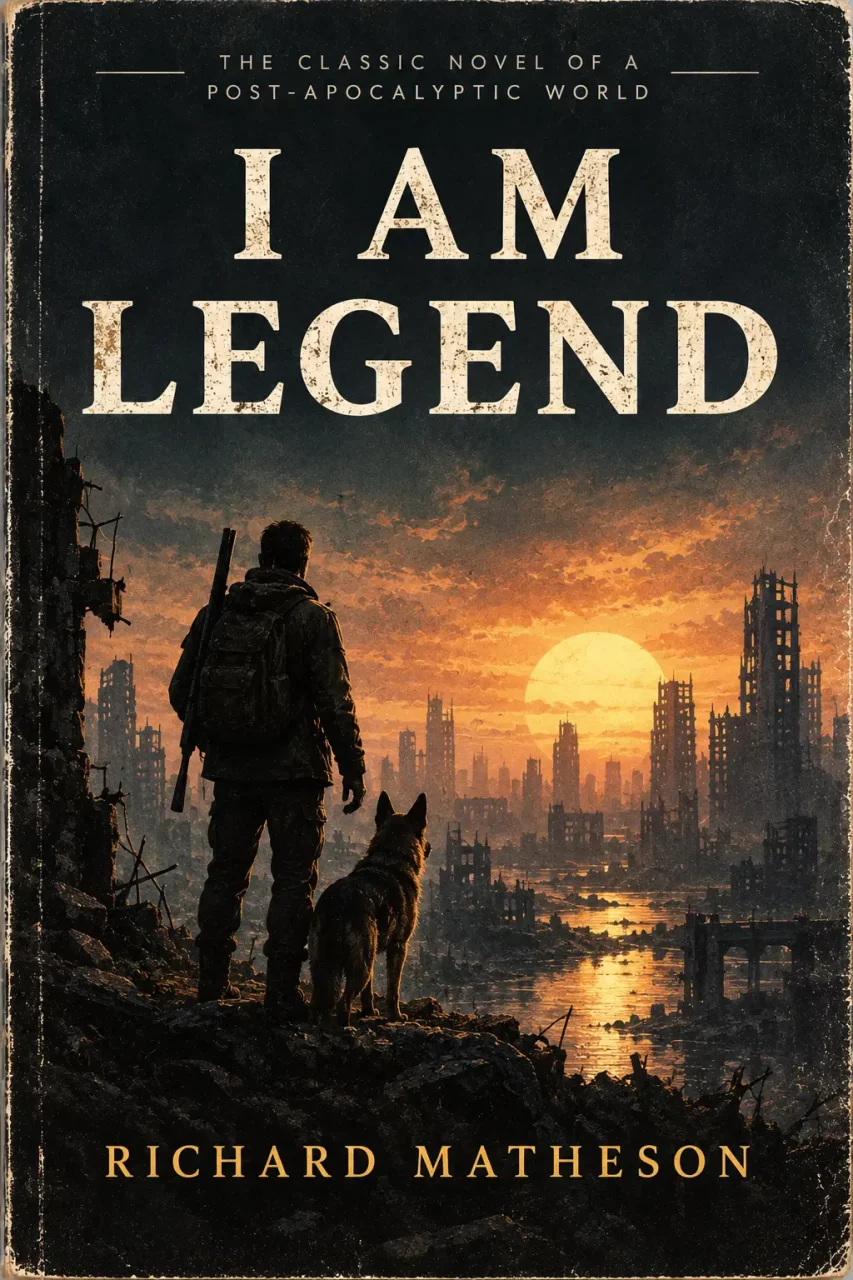
However, Robert has a secret weapon in the form of technical writing. At various points in the book, Robert makes the smart decision to find and read technical manuals, scientific reports and other texts that help him repair and operate equipment, understand complex medical and scientific concepts, and generally stay alive in a hostile world. The best example of this is in Chapter 10, where Robert visits the science room of the Los Angeles public library and starts reading many medical and scientific texts. Using this documentation, he is able to get an understanding of the Bacillus Vampiris disease, its weakness to sunlight, and how it could mutate and change. Without spoiling the ending, this gives Robert an important understanding of what happens later in the story.
While this is an extreme example, it does show how well-written documentation can help the average layperson understand complex equipment and concepts, and help them to use this information effectively in dire circumstances. It’s also an extreme example of how giving your customers good aftermarket documentation, like repair manuals, can be life-saving. While you may think this is an exaggerated example, we’ve covered examples in history where people have been caught in equally bad circumstances, and technical writing has helped them overcome those odds, in our blog ‘When Technical writing saved the day’.
Do Androids Dream of Electric Sheep?
Phillip K Dick’s sci-fi masterpiece, made more famous by the film adaptation ‘Blade Runner’, is a bit of a treat for technical writers, as it not only has lots of very retro-futuristic devices, but also characters finding out how to use them correctly, using technical documentation.
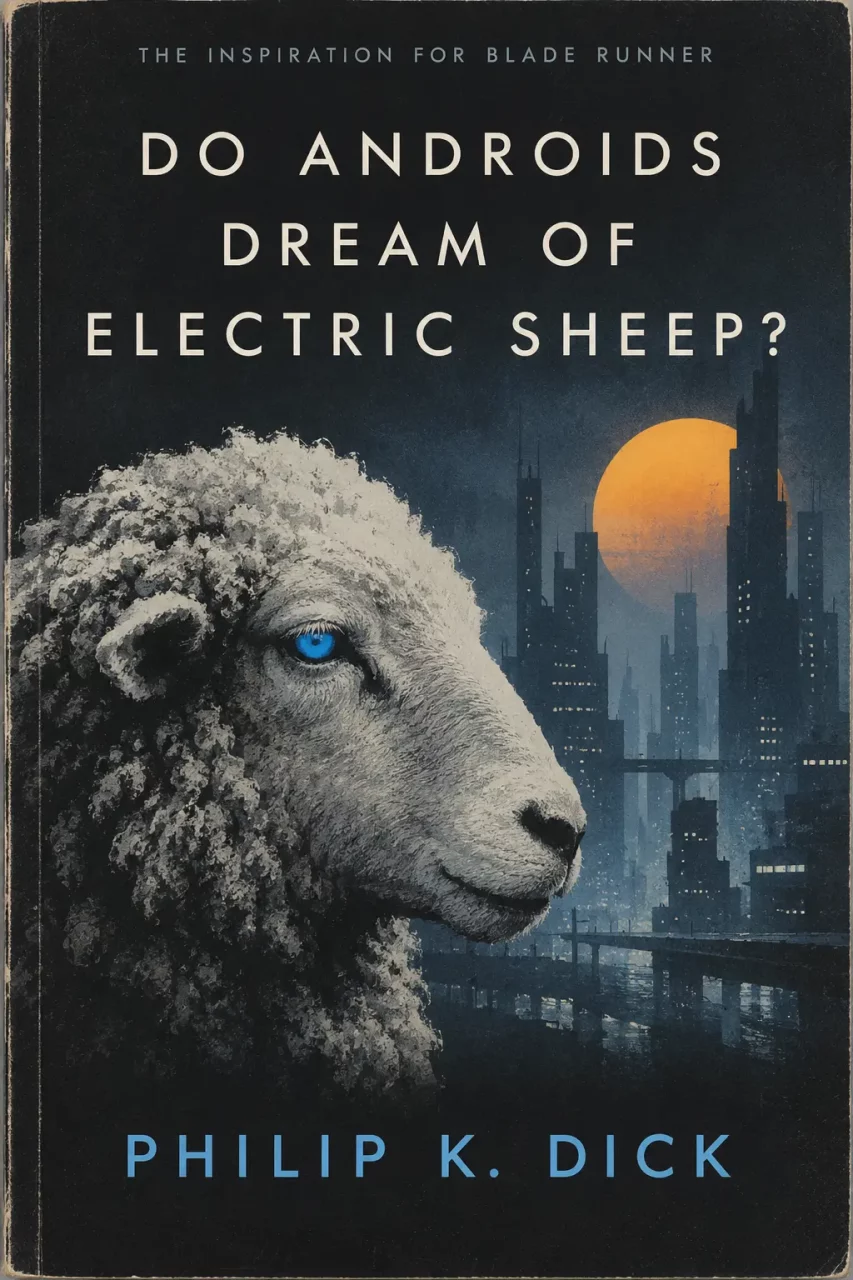
Starting with the Penfield mood organ, which Rick Deckard and his wife, Iran, use to set their emotional states. Through reading the prose, the reader can tell that there are at least 888 different settings, which both Iran and Rick seem to have a good working knowledge of, as they both discuss the pros and cons of different settings in the first chapter. However, later in the novel, Iran studies the manual for the Penfield Mood Organ, having trouble deciding what mood she should be in before Rick returns home.
Also in the first chapter, Rick first learns of the new Nexus-6 androids by reading their technical specifications. He finds out that due to their advanced brain design, having over 10 million separate electrical pathways, the only way of detecting them is through a Voigt-Kampff test, which he then uses to track down suspected Nexus-6 models. Rick also consults several manuals for maintaining robotic animals, and also carries a copy of Sidney’s Animal & Fowl Catalogue, which contains information on the prices of robotic animals, as well as other information, which he refers to in conversation.
Overall, Do Androids Dream of Electronic Sheep shows how useful technical documentation can be when dealing with new technology, even if you are well-versed in tech. Characters refer to, and sometimes carry, technical documentation and use it frequently to get the most out of tech, and also to help learn about new tech, such as the Nexus-6, which they haven’t come into contact with before. Characters even use documentation for bits of kit they use every day, to ensure they get the most from its functionality. Some of my better qualified colleagues cover this subject in more detail in their blogs, such as ‘Why great documentation matters in the research field’ and ‘What is product documentation and how do I make it high-quality’.
Want to find out more?
A Canticle for Leibowitz
Walter Millers’s 1959 A Canticle for Leibowitz is an epic post-apocalyptic novel which should be required reading for all technical writers. The novel is split into three distinct parts and covers three critical points in history for an order of Catholic monks, called the Albertian Order of Leibowitz, as they seek out technical manuals and scientific knowledge to preserve them.
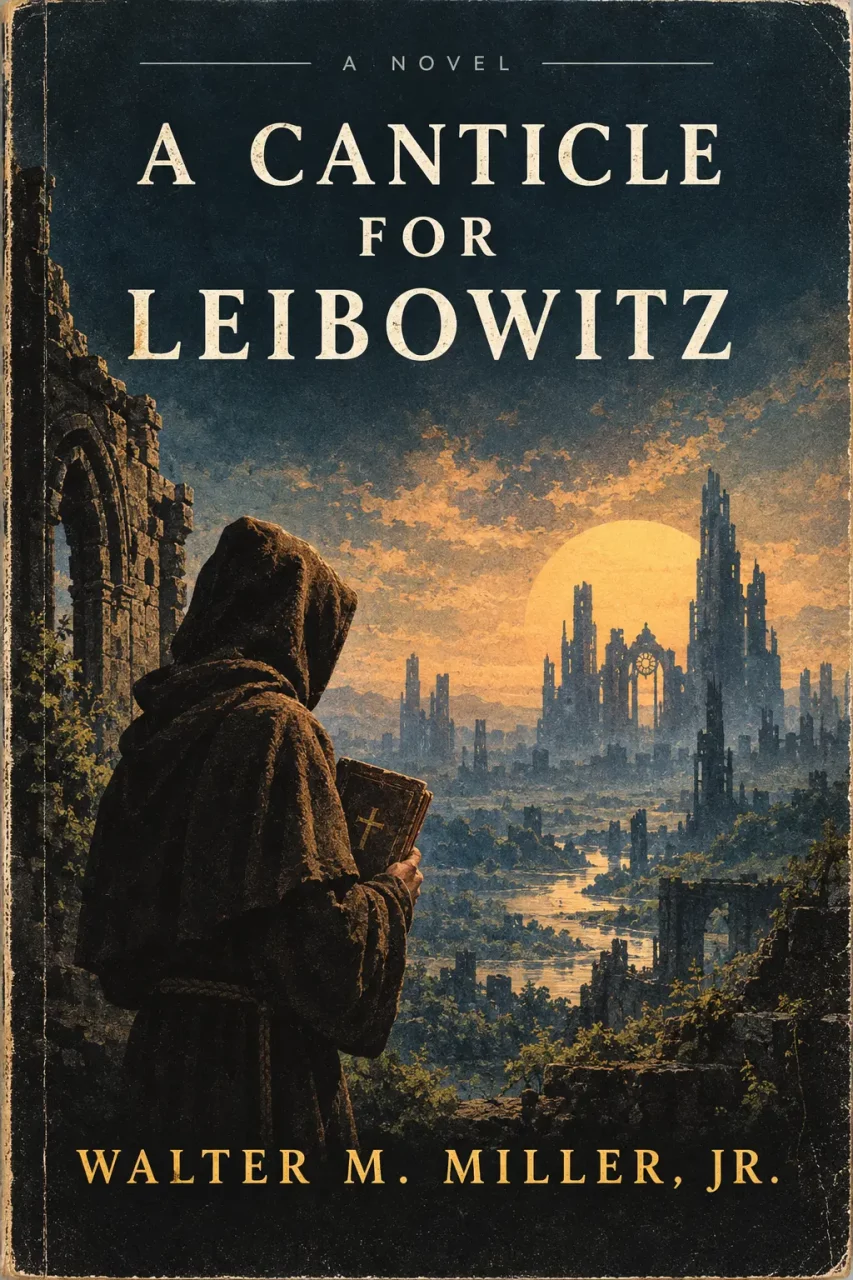
Part one, Fiat Homo, picks up 600 years after a devastating nuclear war has plunged humanity back into a new dark age. A sect of monks battle against the ‘Simplification’, a movement of people who actively seek out technical and scientific knowledge, and those who know it, and destroy it. In this first section, a young novice, Brother Francis Gerard, finds a bunker full of scientific and technical documentation. After a long and perilous journey to bring the documentation back to the order, it is copied and preserved by the brotherhood.
The next section, Fiat Lux, picks up in 3174, when humanity is starting to recover technologically, partially thanks to the efforts of the order. In fact, characters in this section visit the monastery to study the texts the monks have preserved (such as the ones in Part One), so that they can create their own technology. One such inventor is Brother Kornhoer, who creates a primitive electrical generator. Although political machinations threaten the brotherhood, they keep up their efforts to preserve as much knowledge as possible, and after 600 years, this practice is beginning to bear fruit.
The last section of the book, Fiat Voluntas Tua, picks up another 600 years in the future, where mankind has now surpassed the technology of the 20th century, has built spaceships and space stations, and is establishing colonies in space. Unfortunately, nuclear war breaks out again, but not before members of the order escape into space, taking with them a wealth of technical and scientific knowledge, preserving it for future generations and helping improve the odds of humanity surviving offworld.
The importance that the order places on finding, recording, and disseminating technical knowledge, and how this, over time, leads to humanity’s recovery (although inadvertently contributing to its second downfall) is not only a great concept that technical writers can get behind, but also shows how context is key to technical documentation. At the beginning, the monks are working with incomplete scraps of information, without any knowledge of their wider context. It takes hundreds of years for the order, and humanity in general, to pull together all the disparate information and put it to good use. Maybe, if the monks had a good content operations strategy, like in this blog here, this process would have been much easier.
Technically literate
I hope this brief look at technical writing in literature has helped you understand the importance of technical writing: how it helps users in dire circumstances understand complex ideas and equipment, and use them effectively; how even those well-versed in technology will always find technical documentation useful, and how it helps users quickly get to grips with new technology. Finally, we even play with the idea of how a good content operations strategy could help the human race recover from an apocalypse a little bit quicker.
If you have any questions about this article, would like to talk to us about a technical writing project, or have some further book recommendations, contact us here. We’d be more than happy to hear from you.
Related articles

Technical Manuals
3di has the expertise to deliver accurate, clear technical manuals for complex products and services.…

Why great documentation matters in the research field
In this article, we look at how quality documentation plays a key role in scientific…

5 steps to create AI-ready documentation
5 steps you can take to make your technical docs easier for AI to discover…